Split, Croatia | 4–9 May 2026
What happens when two long-established creative ecosystems—one rooted in a hybrid entrepreneurial model in Portugal and the other in community-led cultural infrastructure in Croatia—come together to exchange practices, governance models, and lived experiences of running creative hubs?
Over five days in May 2026, CRU Creative Hub (Porto, Portugal) and Culture Hub Croatia (Split, Croatia) engaged in an intensive peer-to-peer exchange focused on creative ecosystems, district-level cultural development, and the long-term sustainability of independent cultural infrastructures in urban contexts.
The visit brought together Miguel Ferreira, Co-Founder and Hub Manager of CRU Creative Hub, and Tânia Almeida Santos, President of Quarteirão Criativo, alongside Marina Batinić, Jasmina Šarić, and Kristina Tešija from Culture Hub Croatia. Together, they explored how creative hubs can evolve from individual spaces into broader territorial systems of cultural and social production.
Two Ecosystems, Two Models, One Shared Question
At the core of the exchange was a shared question:
How can creative hubs move beyond the management of space to become long-term drivers of district-scale cultural, social, and economic ecosystems?
CRU Creative Hub, founded in 2012 in the Bombarda district of Porto, represents a hybrid model that combines coworking, cultural programming, residencies, and European project participation. Operating as a private limited company with a strong community mission, CRU supports a network of over 350 members and has become a recognised actor in European cultural innovation networks.
Closely connected to CRU, Quarteirão Criativo – Local Development Association extends this ecosystem into the wider Bombarda neighbourhood, engaging over 100 businesses and cultural actors in participatory strategies for local development rooted in identity, collaboration, and urban vitality.
In Split, Culture Hub Croatia operates PROSTOR, a non-profit creative hub located within the modernist residential complex Kineski Zid in the Spinut district. Alongside its satellite space T29, CHC develops a multi-layered programme combining coworking, exhibitions, residencies, and participatory cultural activities shaped by open calls and shared governance.
Together, both organisations represent two complementary approaches to cultural infrastructure: one emerging from entrepreneurial cultural activism, the other from community-driven non-profit practice embedded in public-interest cultural work.
Exploring PROSTOR: Space as Ecosystem
A central part of the exchange was dedicated to an in-depth exploration of PROSTOR as both a physical environment and an organisational ecosystem.
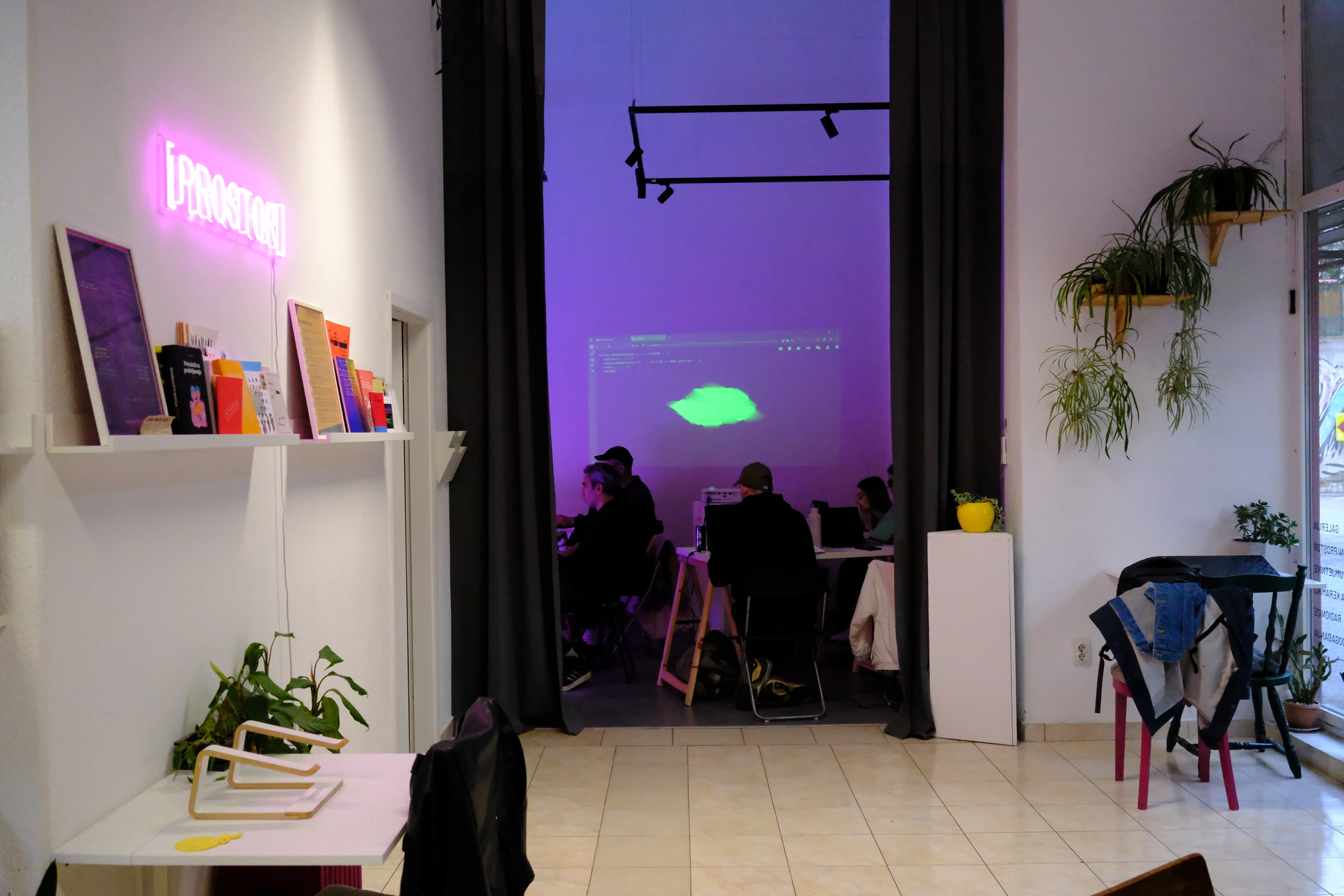 Participants visited the main hub and its satellite space T29, engaging directly with the spatial logic of the building—its coworking areas, exhibition spaces, residency zones, and informal communal infrastructures such as libraries, studios, and adaptable meeting rooms.
A key highlight was the “Adopt the Space” programme, an annual open call inviting artists, civil society organisations, and local communities to activate PROSTOR with free public activities. During the visit, this programme was experienced first-hand through events such as Dodir Gline (“Touch of Clay”), a ceramics workshop and exhibition by Udruga Srce, as well as a community-driven queer cultural event. These activities demonstrated the hub’s capacity to remain open, accessible, and responsive to diverse social needs.
Residencies, Mobility and Cultural Expansion
Discussions with the CHC team focused on PROSTOR’s residency framework and its role in extending the impact of the hub beyond its physical boundaries.
Key topics included curatorial selection processes, thematic programming cycles, financial structures, and strategies for public dissemination of residency outcomes. Particular attention was given to the Curator-in-Residence programme, which hosts international curators for research-based stays in Split.
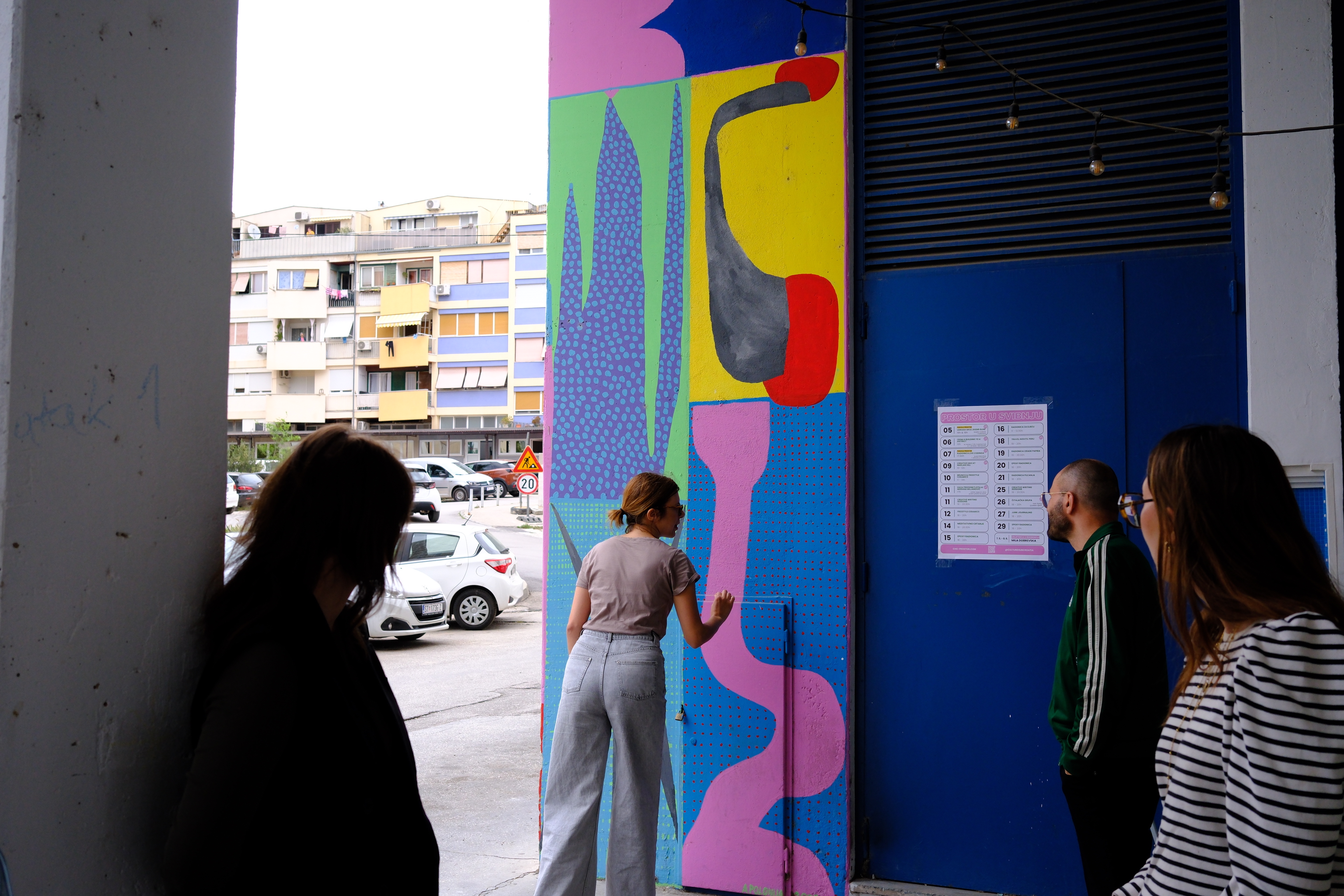 A defining example of spatial expansion through artistic practice was Filling the Void, an audio guide created by artist Verica Kovacevska following a residency in 2022. Mapping 18 listening points around the Kineski Zid building, the work reinterprets modernist heritage through sound and place-based storytelling. Walking the route in the Spinut neighbourhood offered a tangible experience of how artistic research can reshape the perception of everyday urban environments.
The exchange also included a meeting with current resident artist Mila Dobrevska, whose interdisciplinary practice—developed within the framework of the DENES Young Visual Artist Award—explores identity, emotion, and material expression through multiple artistic media.
Governance, Sustainability and Cultural Infrastructure
Across multiple sessions, both teams engaged in open discussions about the structural realities of independent cultural organisations.
Themes included funding precarity, staff sustainability, volunteer engagement, and the challenge of balancing cultural mission with financial resilience. Particular attention was given to hybrid revenue models, including space rental, hospitality activities, and diversified service-based income as tools for strengthening organisational stability without compromising cultural integrity.
These discussions were enriched by encounters with actors from Split’s broader independent scene, including KLFM community radio, whose long-standing volunteer-driven model reflects similar challenges around continuity, intergenerational engagement, and cultural sustainability.
Public Exchange: From Space to District
A key moment of the programme was the public session From a Building to a District: Creative Community as a Living Ecosystem, co-hosted at PROSTOR as part of the ECHN P2P programme.
Miguel Ferreira presented CRU’s evolution as a hybrid creative hub and its role in fostering creative entrepreneurship and international collaboration. Tânia Almeida Santos introduced Quarteirão Criativo as a neighbourhood-scale governance model, demonstrating how a local cultural ecosystem can evolve from a physical hub into a coordinated territorial network of businesses, creatives, and institutions.
The session opened a broader dialogue on how cultural infrastructures can operate simultaneously at the level of space, neighbourhood, and international network.
Split’s Cultural Landscape: Between Heritage and Experimentation
The exchange also included visits to key cultural sites in Split, including Klub Kocka in the Dom Mladih complex—a historically activist-driven cultural space that emerged from civic occupation in the 1990s and continues today as a multidisciplinary cultural hub.
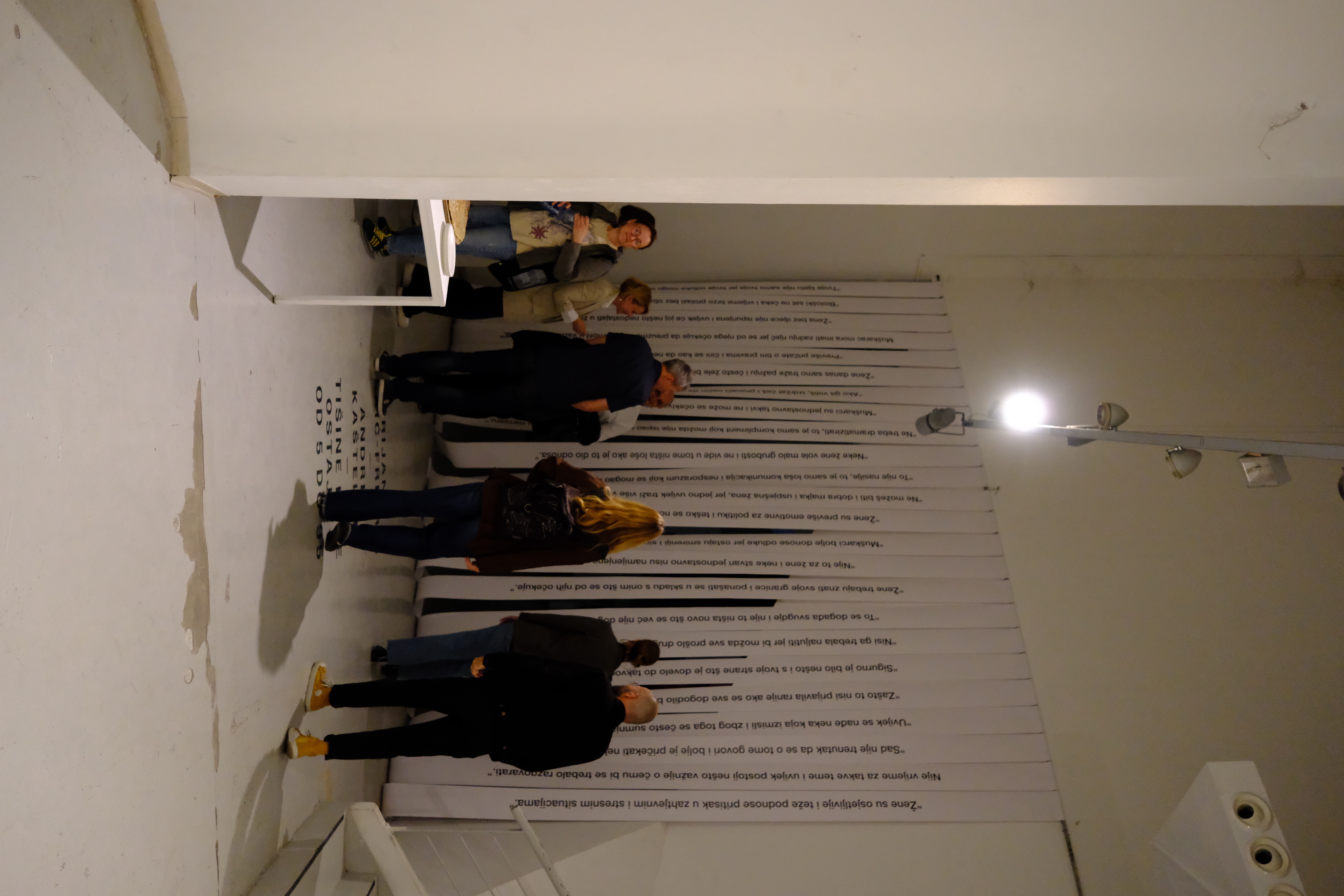 Here, participants engaged with exhibitions such as Silences That Remain – from 5 to 95, a participatory long-term research project exploring lived experiences across generations, as well as live music programming that reflects the venue’s ongoing role in alternative cultural production.
Urban exploration extended to Diocletian’s Palace in the historic centre and the modernist district of Split 3, offering contrasting perspectives on heritage, planning, and contemporary urban life. These site visits provided a wider contextual frame for understanding PROSTOR’s position within Split’s evolving urban and cultural landscape.
Future Collaboration and Next Steps
This peer-to-peer exchange formalised and further deepened a collaboration that has been developing informally since 2024 between CRU Creative Hub and Culture Hub Croatia. Beyond consolidating an existing relationship, it established a clear shared roadmap for continued cooperation across artistic, organisational, and European dimensions.
Both organisations agreed to develop a structured bilateral residency programme between Porto and Split, strengthening artistic mobility and knowledge exchange between CRU Creative Hub, Quarteirão Criativo, and PROSTOR. In parallel, they committed to jointly exploring European funding opportunities for 2026–2027, with particular focus on Creative Europe and Erasmus+ frameworks, addressing themes such as creative ecosystems, governance models, and transnational artistic collaboration.
To further consolidate this partnership, a reciprocal peer-to-peer visit to Porto is planned, enabling Culture Hub Croatia representatives to engage directly with CRU and the wider Bombarda creative district ecosystem. Alongside these activities, both partners will continue collaborating within the ECHN network, using it as a shared platform for visibility, exchange, and the development of future initiatives.
What emerged from the exchange goes beyond a comparison of two organisational models. It reflects a shared understanding of how cultural infrastructures evolve across scales—from individual spaces, to neighbourhood ecosystems, and ultimately to transnational networks of practice.
By connecting Porto and Split, CRU Creative Hub and Culture Hub Croatia reinforced a common commitment to building resilient, adaptive, and socially grounded cultural ecosystems. The relationship is now moving beyond exchange alone, towards the gradual formation of a shared ecosystem in motion.