Prato, Italy | 20–24 April 2026
What happens when a rural creative hub rooted in traditional crafts and natural materials meets a research-driven textile centre embedded in one of Europe’s most important industrial districts?
Over five days in April 2026, FarmLab.at (Kapfenstein, Austria) and Lottozero (Prato, Italy) came together through the European Creative Hubs Network Staff Exchange program to explore how knowledge, techniques, and organisational models can travel between different territorial contexts. The exchange connected FarmLab’s rural experimentation with Lottozero’s textile research ecosystem, creating a space for mutual learning around craft, digital fabrication, circular production, and creative hub development.
Connecting Rural Experimentation and Textile Innovation
At the core of the exchange was a shared inquiry:
How can creative hubs use knowledge, infrastructure, and local resources to develop sustainable practices across different contexts?
FarmLab operates at the intersection of traditional craftsmanship, digital fabrication, and nature-based materials, while Lottozero is embedded in Prato’s historic textile district, combining research, design, production, and circular textile practices. Although their environments differ significantly, both organisations share a commitment to experimentation, knowledge exchange, and the creation of new relationships between materials, communities, and creative practices.
The exchange aimed to better understand Lottozero’s organisational model, explore the role of infrastructure in supporting creative production, and identify opportunities for future collaboration between rural and industrial ecosystems.
Learning Through Space, Materials and Practice
The program combined strategic discussions, technical sessions, site visits, and hands-on experimentation.
The exchange began with an introduction to Lottozero’s history, mission, and operational model led by founder and director Tessa Moroder. Discussions focused on residency programs, funding structures, organisational sustainability, and the balance between cultural activities and production-oriented practices. A networking session around bioeconomy in textiles further expanded conversations on potential research collaborations.
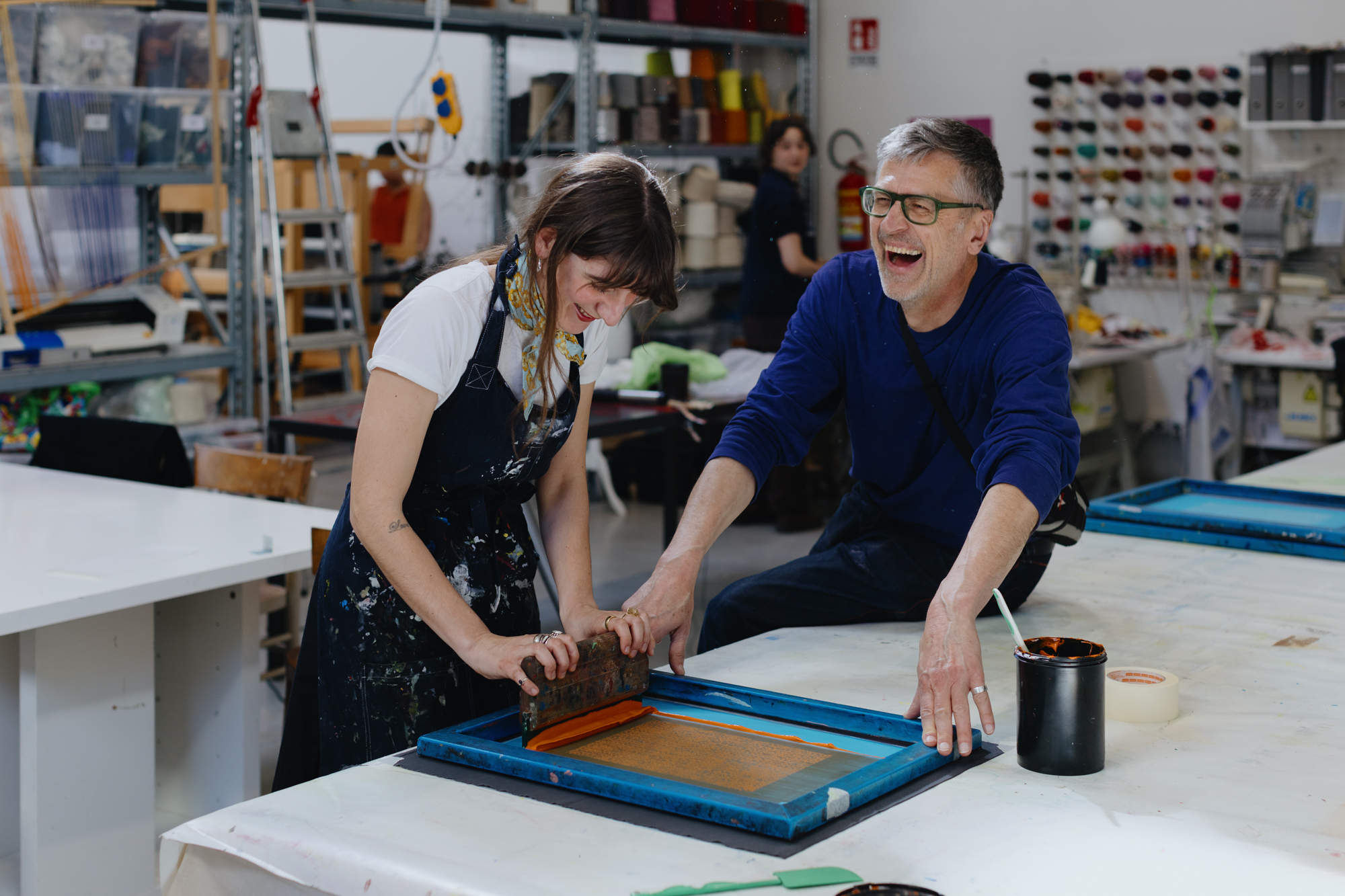 A second phase focused on Lottozero’s technical infrastructure. Through a guided tour of the laboratories with Lab Manager Federica Valli, FarmLab gained insights into the management of specialised equipment, workflows, and the role of technical facilities in enabling research and experimentation. The session also created space to discuss Lottozero’s emerging rural hub ambitions, with FarmLab’s experience serving as a valuable reference point for future development.
The exchange continued through practical workshops and encounters with textile specialists. A session led by Maison du Flock introduced participants to flocking techniques, followed by hands-on experimentation exploring new material applications and workshop formats. Further technical training on knitting machines provided directly transferable knowledge for FarmLab, supporting the activation of existing equipment and the development of future educational activities.
Visits beyond Lottozero’s facilities offered a wider understanding of Prato’s textile ecosystem. A visit to a local textile recycler, the cenciaiolo, demonstrated the district’s circular production model, where textile waste is sorted, processed, and reintroduced into manufacturing cycles. The exchange concluded with a visit to the Textile Museum of Prato, connecting contemporary experimentation with the historical evolution of textile production in the region.
Key Learnings: From Infrastructure to Ecosystems
One of the main insights from the exchange was the importance of infrastructure in supporting creative practices. Lottozero demonstrated how laboratories, machinery, research resources, and knowledge-sharing spaces can enable a creative hub to operate at the intersection of culture, education, and production.
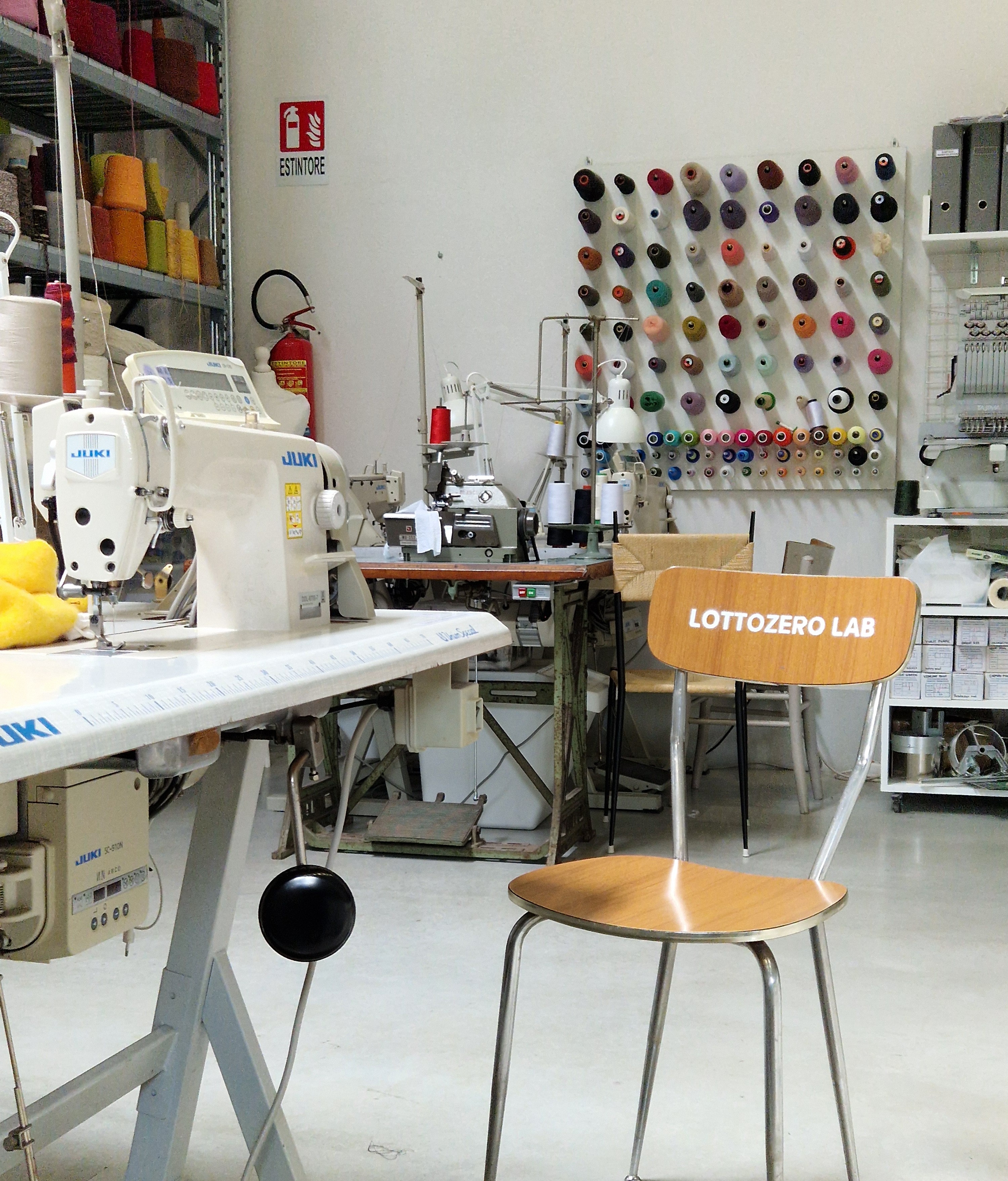
At a technical level, the exchange provided FarmLab with new skills and methodologies, particularly around textile techniques and equipment management. These learnings will support future workshops and material explorations within the rural hub.
At a broader organisational level, Lottozero offered an example of how a creative hub can build strong connections with its surrounding industrial ecosystem while maintaining a cultural and research-oriented mission. At the same time, the exchange highlighted that successful models cannot simply be replicated elsewhere—they must be adapted to local contexts, resources, and communities.
The experience reinforced the value of peer-to-peer learning as a tool based on direct practice, shared challenges, and horizontal knowledge exchange.
Outcomes and Future Collaboration
The exchange generated both immediate and long-term outcomes. FarmLab gained new technical competencies, including training on knitting machines and exposure to textile techniques such as flocking, while also developing new ideas for workshops and educational formats.
Beyond technical learning, the exchange provided valuable inspiration for FarmLab’s future programming, particularly around integrating research, production, education, and circular material practices within a rural creative hub model.
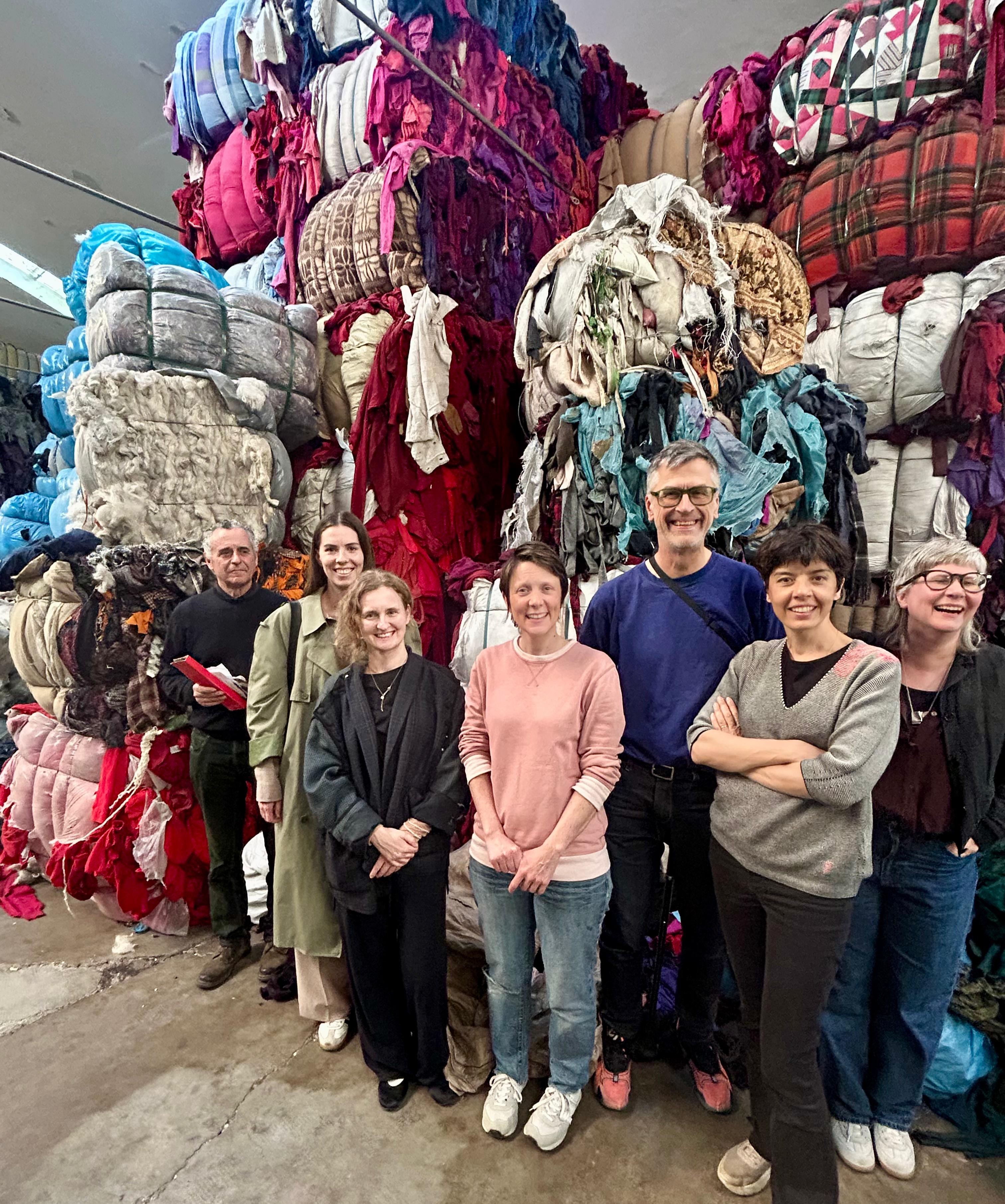 The mobility also strengthened the relationship between FarmLab and Lottozero, creating opportunities for future joint workshops, reciprocal exchanges, and potential European cooperation projects. More broadly, the exchange demonstrated the potential of connecting seemingly different environments—rural and industrial—as complementary spaces for innovation and knowledge creation.
The Staff Exchange format proved particularly effective in enabling concentrated learning and meaningful collaboration. By combining access to infrastructure, practical experimentation, and informal exchange, the program created a strong foundation for continued partnership and long-term knowledge circulation between creative hubs.