How can discarded materials, traditional textile knowledge, and creative experimentation contribute to imagining more sustainable futures?
The exchange between Carmen Casas Úbeda from Anda Cowork (Granada, Spain) and Le Textile Lab (Lyon, France) explored this question through a collaborative journey centred on material research, textile innovation, and sustainable artistic practices. The exchange brought together two creative hubs sharing a strong commitment to environmental responsibility and the exploration of new ways of working with materials.
Carmen’s artistic research focused on the development of Chrysalis-Labyrinth, an ongoing project exploring ideas of transformation, protection, lightness, and interconnectedness through textile forms. The exchange aimed to investigate how recycled textiles, natural fibres, and local waste materials could become part of the creative process, while exploring new possibilities for collaboration and experimentation within a textile-focused creative hub.
Exploring Materials, Craft and Local Ecosystems
The exchange began with an exploration of Lyon’s cultural and environmental ecosystem, discovering a city strongly engaged with social and ecological practices. Visits to local shops dedicated to recycled objects and textiles provided valuable insights into existing approaches to reuse and circularity. The visit to the Musée Gadagne, with its connection to puppetry and textile arts, also offered inspiration on the relationship between materials, storytelling, and cultural expression.
The following days were dedicated to discovering the facilities and working methods of Le Textile Lab, both in Lyon and its Villeurbanne extension, where the practical work took place. Together with Capucine Robert and Marion Guillaud from Le Textile Lab, the project was adapted to the available time and resources, identifying the most suitable materials and techniques for further development. Particular attention was given to the hub’s experience with recycled textile applications, including the use of residual wool and experimental approaches to transforming lower-quality materials into new creative resources.
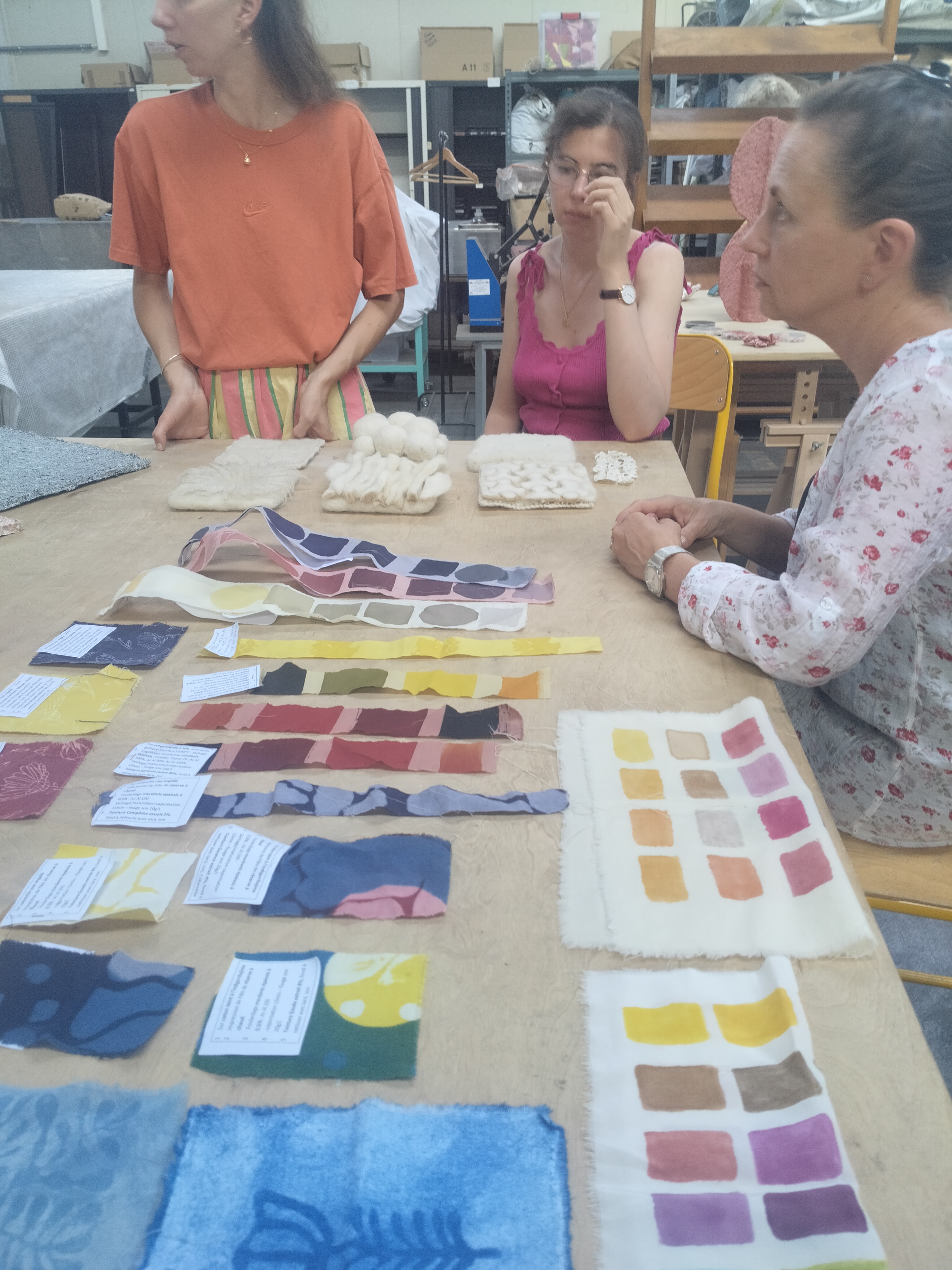 The collaborative experimentation focused on selecting materials that reflected the conceptual direction of Chrysalis-Labyrinth. After exploring different possibilities, the team decided to work exclusively with recycled textile materials, including untreated raw wool from local sheep and leftover threads of different colours, textures, and qualities. The initial idea of using compressed textile scraps was reconsidered, as it did not correspond with the lightness and fluidity envisioned for the final installation.
During the practical sessions, the team began creating the first textile structures, developing three chrysalis forms of different sizes. Participants experimented with weaving, wool felting, sewing, and embroidery techniques, combining traditional craftsmanship with contemporary artistic exploration. Although the installation was not completed during the exchange, a public presentation of the work-in-progress allowed the project to be shared with a wider audience and opened conversations around sustainable materials and creative reuse.
The exchange concluded with further reflection on future developments, including visits connected to Lyon’s textile heritage, such as the Maison des Canuts, which provided additional historical context on the city’s long relationship with textile production and craftsmanship.
Outcomes and Future Collaboration
The exchange created a strong foundation for continued collaboration between Anda Cowork and Le Textile Lab, demonstrating how creative hubs can support innovation by connecting artistic practice, sustainability, and material experimentation.
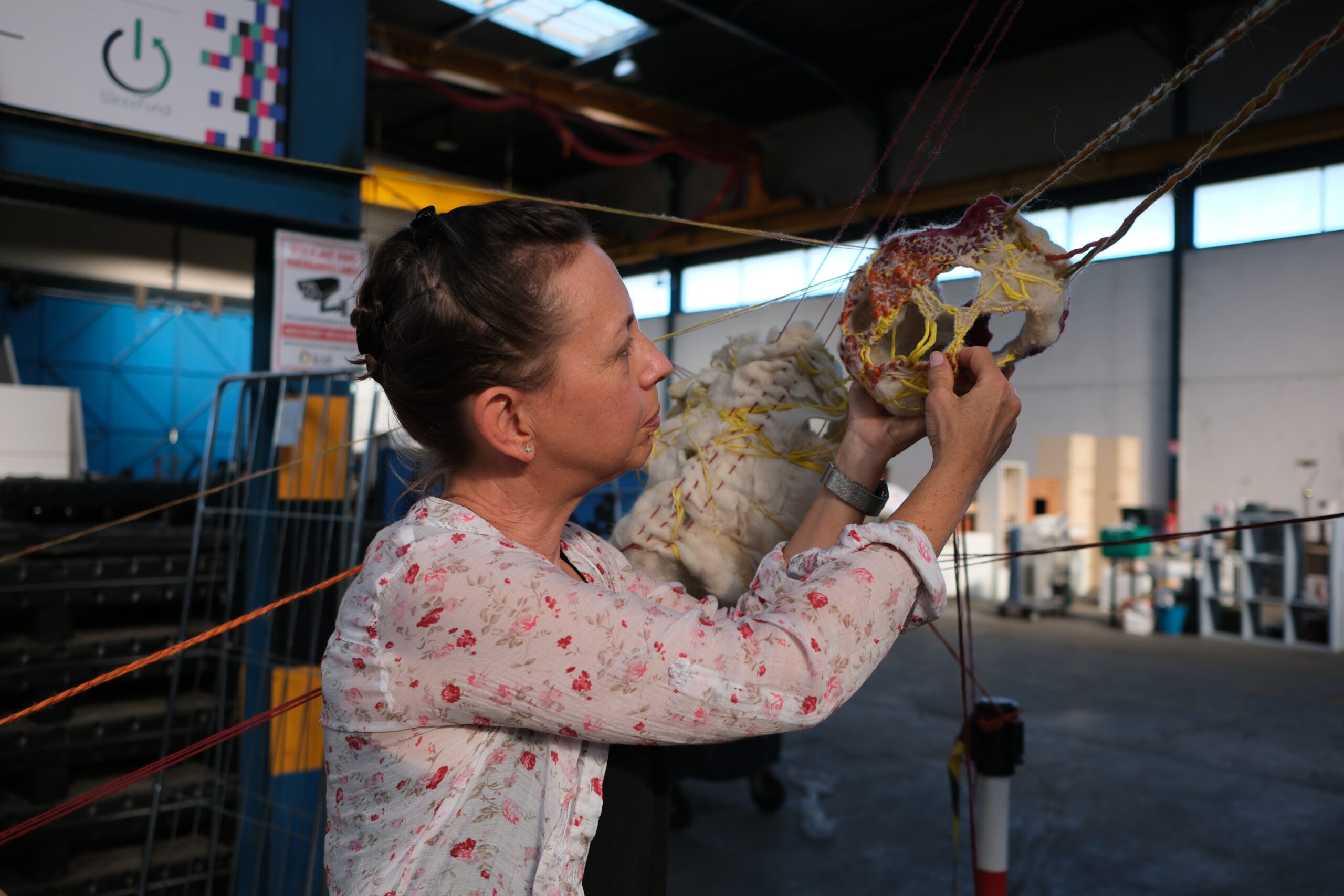 One of the most valuable outcomes was the development of Chrysalis-Labyrinth, a collaborative artistic project exploring how recycled textiles and natural materials can be transformed into new narratives around sustainability, protection, and regeneration. The project highlighted the potential of creative hubs to act as spaces where environmental challenges are addressed through hands-on experimentation, knowledge exchange, and artistic research.
Beyond the immediate artistic results, the exchange strengthened the relationship between the two organisations and opened new possibilities for future cooperation. Both hubs plan to continue sharing knowledge, exchanging expertise on textile materials, and exploring further collaborations, including potential Erasmus+ exchanges and artistic residencies.
What began as an exploration of fibres and materials became a broader reflection on the role of creativity in shaping more sustainable futures. By bringing together different approaches , from textile research and recycled materials to artistic storytelling and community-based innovation, the exchange demonstrated how collaboration across borders can transform local knowledge into shared possibilities.
The journey of Chrysalis-Labyrinth has only just begun. As the project continues to evolve, it carries forward the central question that shaped the exchange: how can we weave new relationships between materials, people, and the planet to create a more sustainable world?