From 2 to 6 February, participants from all over Europe gathered in Galicia, Spain for the latest ECHN Workshop led by Sende about ‘Low Tech Communication from the Village’.
We have a winner! SENDE will be hosting the next ECHN Workshop!
Over four days at the beautiful Galicia in the premises of Sende, hubs from across the ECHN network gathered to explore low-tech communication methods, side projects, organic marketing, and opportunities for collaboration. The workshop agenda included structured sessions around the theme of low-tech communication accompanied with meaningful conversations, practical exercises, and spontaneous moments that brought the ECHN community closer together.
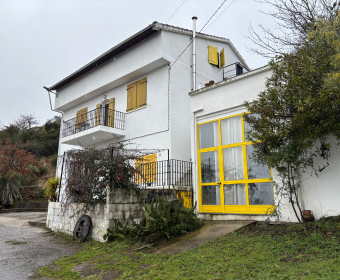
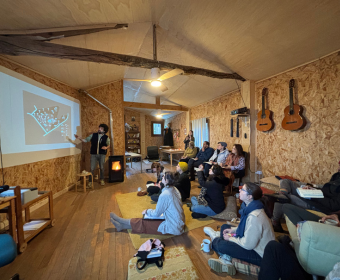
The workshop opened with a morning introduction to low-tech communication led by Edo Sadiković from Sende. Participants learned how Sende has communicated since the very beginning: by documenting processes as they happen, sharing them with people, and focusing on authenticity rather than equipment or trends. The emphasis was on producing content that feels natural, whether writing, recording, or capturing simple observations so that communication does not become an additional pressure in a hub’s day-to-day tasks. The outcome was that, instead of chasing likes or followers, it can be more valuable to attract people who genuinely connect with the space and its values.
Fun was always part of this week of sessions, that's why our morning ended with a nature-inspired name game. Each participant shared their name along with an element from nature starting with the same letter, while also repeating the last three people’s contributions, which led us to have a very collaborative and friendly environment from the very start of the workshop.
On the morning of 4 February, hubs worked on simple side projects (either new ones or ongoing initiatives). These projects did not need to be directly connected to their physical spaces, but they were encouraged to reflect each hub’s values and ideally contribute something meaningful to their communities. Communicating these projects can then indirectly communicate the essence of the hub itself.
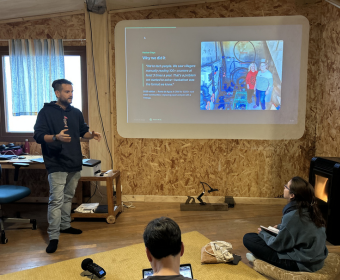
“What to post and how to post so it doesn’t feel like a job?”
In the afternoon, Edo led a workshop on posting in ways that remain enjoyable and sustainable. He emphasised documenting small processes along the way, allowing them to grow into long-term content. Examples included stories from Sende, such as the evolution of a desk, the garden, or even counting the number of barbecue sessions. Simple documentation that naturally became ongoing narratives.
The conversation then shifted spontaneously into how Sende navigates potential problems or conflicts within the space. Participants shared experiences from their own hubs, creating a valuable exchange on how to maintain harmony and communicate expectations without formal rule boards or visible notices.
Later in the day, in a walk around Sende we had the pleasure to meet neighbour José Antonio, who is restoring an old stone house in a traditional way. Participants saw how local homes once had cattle on the ground floor and living spaces above, echoing much of Sende’s own history.
The morning began with a special guest. Agustín Jamardo from Anceu Coliving shared case studies and contributed to Edo’s ongoing workshop assignment on how side projects can function as organic marketing.
“Opposites” as a Form of Free Marketing
Edo then introduced the “opposites” method as a natural form of marketing. Using Sende as an example, he explained that the story would not stand out if the space were located in a major city like Madrid. However, its presence in a remote village with only 15 inhabitants creates a compelling contrast that keeps Sende relevant and present more than a decade later.
Architecture as a Marketing Tool
A second short workshop focused on the role of architecture in communication. Edo discussed how small, intentional design elements within a space can attract attention and become a reason for people to visit. Investing in unique spatial features can make a place memorable, compared to more generic or sterile environments.
Agustín then returned to share the story of Anceu Coliving. He spoke about their coliving practice and emphasised the side projects that form the backbone of their work, illustrating how they contribute to the community while pursuing what they enjoy.
The final morning began with a short presentation on building collaborations within ECHN. This introduced a brainstorming session where hubs explored concrete projects or initiatives they could develop together in the future. The participants presented their ideas for possible future collaborations, bringing the workshop to an inspiring and forward-looking end.
Last but not least, the team this morning became bigger but virtually, by joining ECHN’s monthly online family Brunch. It was a chance for the online attendees to take a glimpse of what was happening in the workshop and discuss a bit about future ECHN initiatives.
The four days at Sende offered a mix of practical tools, shared experiences, and new ideas, grounded in approachable and low-tech ways of communicating, creating, and collaborating. It is needless to say that our days there were not just sessions of professional evolution of our hubs. The cozy spaces of Sende and the daily delicious meals, along with the beautiful scenery of Galicia were definitely something that we will all remember for a long time.